What is implantology?
Implantology is the branch of dental medicine that deals with replacing lost teeth using dental implants. An implant is a small titanium screw that is placed into the jawbone and takes over the role of the root of the lost tooth. A crown, bridge or prosthetic restoration is then placed on the implant, which restores the natural appearance and full function of the smile.
Dental implants are considered the most modern and longest-lasting solution for replacing one, several or all lost teeth, because they provide stability, a natural feel and preserve the long-term health of the oral cavity.
When is implant treatment needed?
Implant treatment is recommended when one or more teeth are missing and when you want a permanent, functional and aesthetically high-quality solution. Implants can serve as a replacement for a single tooth, as a bridge support or as a support for All-on-4, All-on-6 and implant-supported dentures.
- a single missing tooth
- several missing teeth
- complete edentulism of one or both jaws
- unstable conventional dentures
- a wish for a permanent and natural solution
- preservation of the bone and of the neighbouring healthy teeth
What does implant placement look like?
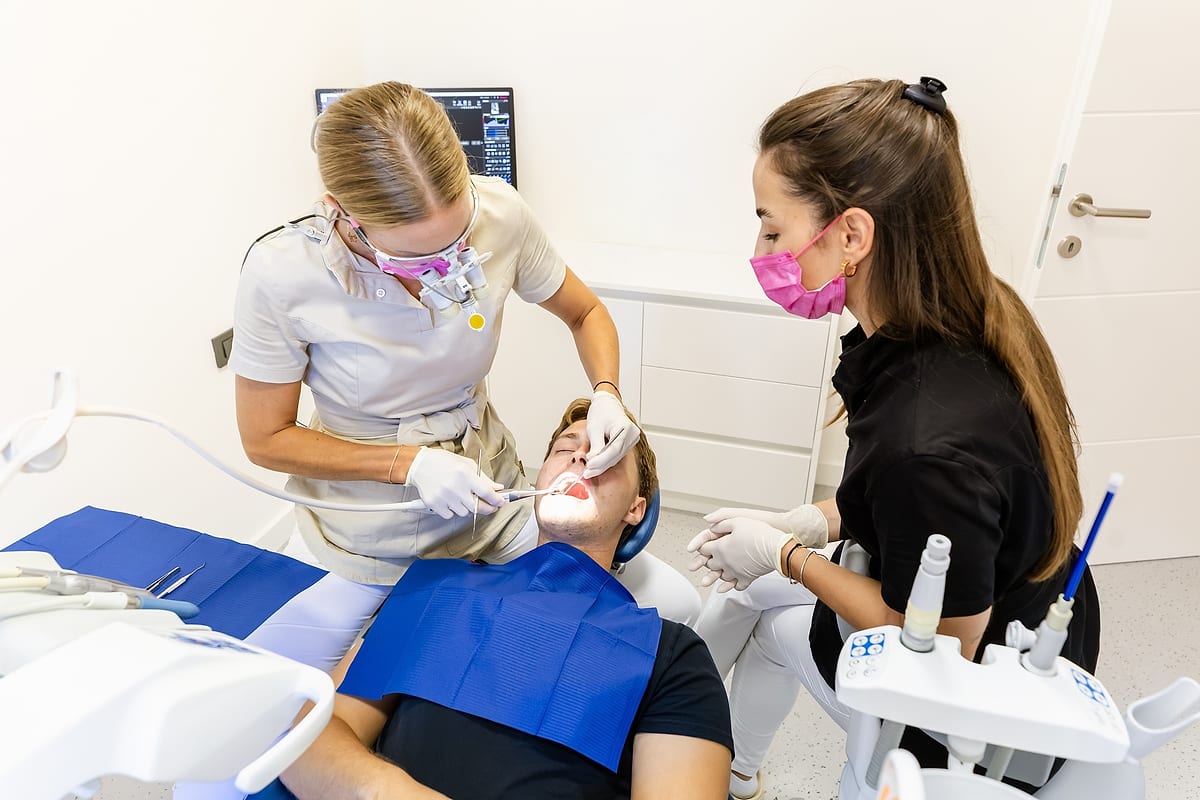
Treatment begins with a detailed examination and the analysis of a digital orthopantomogram or CBCT scan so that we can assess the condition of the bone and plan the optimal position of the implant. After an individual treatment plan has been created, the surgical placement of the implant follows under local anaesthesia.
After the healing period the implant fuses with the bone, and a prosthetic restoration is then made and placed, fully restoring the function and aesthetics of your smile.
Advantages of dental implants
Natural appearance and feel
Implants look and function like natural teeth and allow a confident smile and normal speech.
Preservation of the neighbouring teeth
Unlike conventional bridges, implant placement does not require grinding down the healthy neighbouring teeth, which preserves their structure.
Preservation of the jawbone
After tooth loss the bone gradually recedes. An implant transfers the load to the bone and helps preserve its density and prevent resorption.
Full chewing function
Implants allow stable chewing of food without the prosthetic restoration moving, which contributes to better digestion and a higher quality of life.
Why choose Dentico for implant placement?
Every implant procedure is planned with the help of modern digital diagnostics in order to ensure maximum precision and the long-term success of the treatment. With an individual approach we choose the best solution for each patient, whether it is the replacement of a single tooth or a complete reconstruction of the smile.
Frequently asked questions
Implant placement is performed under local anaesthesia, so you do not feel pain during the procedure. Mild discomfort is possible afterwards and subsides within a few days.
The duration of treatment depends on your case, the quality of the bone and the type of prosthetic restoration. After the examination we will create a treatment plan with an exact timeframe.
Most adults who have sufficiently healthy bone and good oral health can be candidates for implant treatment. The final assessment is made after the examination.
With proper oral hygiene and regular check-ups, dental implants can last for decades and are one of the longest-lasting solutions in dentistry.
CBCT provides a three-dimensional view of the bone and the anatomical structures, which allows us to plan the implant position precisely and makes the procedure safer.